My field site: the world of lifestyle influencer Bonny Rebecca.

@bonnyrebecca

A field-site refers to the “spatial characteristics, of a field-based research project, the stage on which the social processes under study take place.” (Burrell 2009, p.182). In relation to ethnography, a field site doesn’t have to be either a physical space or digital space but a combination of the two. After week two lecture, I have decided to narrow down my media niche by focusing on one social media influencer to particular Bonny Rebecca.

BONNY REBECCA
Bonny Rebecca is a lifestyle YouTube influencer, who originally started creating content about veganism and her personal experience to inspire people to live a vegan lifestyle in early 2015. However, throughout her career, her content has evolved, and her focus has broadened to not only talk about diet but lifestyle, fashion, homewares, relationships and personal experiences.
As a lifestyle influencer, she users a variety of platforms mainly focusing on YouTube and Instagram to create content and connect with her subscribers and followers.
Bonny who has over 349K subscribers on YouTube and 354K followers on Instagram has the capacity to influence a large portion of society and create a positive impact on people’s lives.

@bonnyrebecca
@bonnyrebecca


Throughout Bonny’s career as an influencer, she gained the trust of her subscribers by how she portrays herself online. By being open and honest and expressing personal information and issues, she deals with it creates a connection between herself and followers. Bonny has done collaborations with brands such as YCL jewels, and ethical jewellery company that aligns with the value’s Bonny expresses online; she also only promotes products she would use/ trust. By sharing personal information and promoting brands, she believes in, and not just any brand for a “paycheck” gives her followers a sense of being a part of her life and her authenticity.

My field site explores all the different aspect revolved the Bonny’s social media platforms.

  • What platforms she uses
  • Who she collaborates with
  • Sponsors
  • The kind of content she creates.
  • Locations and brand promotions.
  • Trends

From my personal experience; I have been following Bonny’s content on and off since 2017. But over the last two years have been consistently following her social media platforms to stay up to date. I love how wholesome and relatable her content is. Not only is the atheistic a vibe, but what she produces I find so organic and real it feels like she is a friend and easy to connect to. Lawson describes the actions of an influencer/ “micro-celebrity” as one to “cultivate a sense of authenticity, intimacy, accessibility, availability, and connectedness with their audiences” (Lawson 2020, p. 4). And this, I believe to be true.

By exploring this field site and gathering new information, It will allow me to gain knowledge about how a lifestyle influencer creates and builds their brand. Which will benefit my future career by helping build a portfolio and learn more of an insight into the social media marketing aspect, as I aspire to get into the marketing and branding after graduation.
My ethnographical research will benefit others who have an interest in social media influencer culture. With social media industry on the rise for people wanting to get into the industry, it is imperative to gain knowledge on how to successfully build a brand and understand the networks of a social media influencer.

until next time

Lucy xx

Reference List

Burrell, Jenna 2009, ‘The field site as a network: a strategy for locating Ethnographic research’, Field methods, 21:2, p182

Lawson, Caitlin 2020 ‘Skin deep: Callout strategies, influencers, and racism in the online beauty community’, New Media & Society, online version, 1-17.

About me.

Hey there, welcome to my blog

Im Lucy, i’m 26, i grew up in the beautiful coastal town of Newcastle aka “Newy”. I’m currently in my second Year at UOW studying a Bachelor of Communications and Media, majoring in Marketing and Advertising.

I love a good adventure and anything spontaneous. Most thrilling thing I’ve done is sky dive with under 12 hours notice. I worked as a camp counsellor for four summer in Wisconsin USA teaching water skiing and High ropes and travelling around the US. Stocked that my early 20’s looked like that.

I love being creative and doing home Renos and refurbishing furniture. I have a background in building design and love creating beautiful spaces.

Fresh air, my friends and dog, the ocean and outdoors make me insanely happy. And i’m a firm believer that music can instantly change your mood.

hope you enjoy my thoughts and all things media

xx

The influencer culture of social media… My media Niche

My media niche for #BCM241 is the influencer culture, particularly on YouTube and Instagram. I have always found myself gravitating towards social media influencer culture. There is something so fascinating and wholesome about having an insight into an “everyday kind of person” someone who may have the same quirky habits or passions as I do. For me, I love travelling, exploring the outdoors, fashion, architecture and interior design. One of my guilty pleasures is YouTube. I love the idea that it is so accessible to anyone to view or create content. You don’t need to be famous or have an agent to create content. If you are inspired and want to create something for yourself or to inspire and help someone else, then YouTube is the platform to do it.

Some of my favourite accounts are YouTubers include:

  • Shannon Beveridge and Cammie Scott who create content for the LGBTQIA community the first people that I have connected to that I feel looks like me/represents who I am. Shannon style also has a focus on photography and travelling, and Cammie style also has a focus on fashion and beauty.
  • Sam Clark, Elana Taber who create a lot of travel vlogs and montages.
  • Bonny Rebecca, and Sarahs day who focus on their health, however has branced out to more lifestyle and home content.
@elenataber
@cammiescott
@sarahsday

All of these influencers are inspirational and wholesome and for a viewer that is precisely how you want to feel when consuming your choice of media. Each of these influencers above has a unique niche that sets them apart from other influencers. Their specialty described above is based on their interests and is what they use to target their chosen audience. All of these influencers also create content for Instagram, which I also follow daily.

I have been getting really into YouTube for the past five years Now and what I feel sets YouTube apart from other social media platforms, and media outlets such as Netflix and Stan is how relatable the content is to the individual. You can find content from fast and easy hacks under 5 mins to step by step instructions on how to learn the piano even Renovations series. It honestly has everything. YouTube has something for everyone. For me, it is how authentic and real each vlog video I watch. I feel a connection with the influencer based on what I believe to be them acting as themselves as opposed to a role they are given in a movie/ TV series. Over the past two years, I have been creating travel and adventure vlogs for my own YouTube account. I do this because I find enjoyment out creating content and putting it together to create my visual diary to look back on in the future and hopefully inspire people to get outdoors and explore.

Instagram is a much-loved favourite social media platform for a lot of people in my demographic. It is a visual diary, a place for you to express yourself and be creative. Each account can filter what content they see and who they choose to follow based on interest and social aspects.
I have been an active member of Instagram since 2012 and love to create my content and follow friends, family and many influencers who inspire and make me feel happy.

Social media and the influencer culture are incredibly powerful and will continue to grow rapidly in the future. I would love to explore this area in more depth in particular influencer culture on YouTube and Instagram. I feel that there is so much to learn and discover within this media niche and might inspire me to start creating more content more regularly.

Until next time

Lucy xx

The fine line between Discrimination and Religious Freedom. How the Religious freedom bill could make the line blurred.

Introduction

Vilification and Discrimination still occur within Australia, even in 2020. We live in a world now that not only journalist, but everyone needs to be aware of the language they use when creating content for the public. It is crucial to be conscious of the restrictions of Freedom of speech. It is essential to understand the legal obligations people are held accountable for when it comes to the harm of another, as well as a person’s right for Freedom of expression and human right. Many federal laws within Australia have been authorised that are constructed to protect the minority groups from discrimination, including the Disability Discrimination Act 1992, the Racial Discrimination Act 1975, and the Sex Discrimination Act 1984. Each state has also validated anti-discrimination legislations.

Australian have progressed significantly over the last fifty years regarding the protection laws of these issues. However, currently within Australian Politics, there is a Religious freedom Bill being discussed through parliament that would create religious privilege and blur the lines between Freedom of speech and hate speech.

So, let’s break this down.

What is Freedom of speech, and how does it apply within Australia?

Freedom of speech is the right to express one’s opinion and ideas legally without government restrictions based on content and subject only to reasonable limitations. (Merriam-Webster)

The Australian Constitution does not particularly protect Freedom of speech more so Freedom of expression. There are already restrictions on Freedom of expression within existing laws and legislations regarding the prohibition of hatred acts and Discrimination against another person. However, these restrictions may be amended if the proposed ‘Religious Freedom Bill is approved. Some people argue this new law would be for the better and give protection to religious opinion, while others argue that it will threaten Human Rights and bring “narrower” protection for a certain minority and Could leave the remaining minorities vulnerable.

Currently, within Australia, no Commonwealth Legislations are protecting the rights of Freedom of expression.

What are Vilification and Discrimination?

Vilification Is a hatred act in public that is to be expected to discriminate or offend another human being based on their sexuality, race, gender, disability and religion. These laws were put in place to protect and discourage hate speech and acts of hate.

Discrimination is when a person and or group acts with intolerance or gives unfair treatment to another person group based on their nationality, age, sexuality, race, religion, ethnicity, disability or political views.

The law and Penalties within Australia

Within Australia, it is unlawful to discriminate. There are anti-discrimination penalties put in place to protect a person against discrimination. The penalties differ between each Act. The penalty is dependent on the type of legislation that is broken for example under the Fair Work Act 2009 the maximum penalty for contravention of the unlawful discrimination protections is $63,000 per contravention for a corporation and $12,600 per contravention for an individual.

Exemptions

Within anti-discrimination laws, there are exemptions allowed. There are some exemptions listed within each Act where it will enable services and jobs to target a certain group. For example; the Act states that it is allowed to advertise for a job for a particular sex if the job requires that sex explicitly for the position. An example would be a male cleaner to clean the male public restroom and vice-versa. Other exemptions include that a service provider may provide services to meet the need of a particular group. Particular exemptions allow a person or group to favour an another within certain situations and therefore is not seen as an act of discrimination.

Case study: Religious Freedom bill 2019

In august of 2019, the attorney-general released drafts of three bills; the Religious Discrimination Bill 2019, the Religious Discrimination (Consequential Amendments) Bill 2019, and the Human rights legislation amendment (Freedom of Religion) Bill 2019, which would make up the religious freedom legislation.
Under this proposed legalisation statements of religion will be protected and will not violate other federal, state and territory discrimination laws.
Statements must be made within good faith; not vilify or provoke hatred against another person. (Karp, 2019)

For example:

  • A student with a disability may be told by a teacher their disability is a trial imposed by God (PIAC)
  • An office worker could declare on social media that a fellow employee is in a wheelchair because they are sinful and urge them to attend a faith healer. Such a “statement of belief would override the workplace inclusion policy”, and any action taken against the offender could be appealed to the Human Rights Commission as “religious discrimination”. (Karp, 2019)
    Other areas of protection fall under medical services. A practitioner, unless it is against the law, may refuse to provide medical treatment or their services.
  • A pharmacist refusing to provide the pill to women for contraceptive use (EM), or hormone treatment (Public Interest Advocacy Centre, LGBTI Health Alliance)

This Bill states that a person of faith does not employ religious Discrimination if they act in accord with their faith and beliefs. However, how would one prove that their beliefs are true to their faith and not a lie to protect them from a law that if not protected by religious Freedom would typically have them prosecuted for Discrimination?
This question is just one of the many concerns people have concerning this proposed legislation. On the 10th of December 2019, the Government released the Second Draft of the Religious Freedom Bill after receiving approximately 6,000 submissions including many campaign-based submissions regarding amendments that they believe need to be made before this Bill is approved.

Concerns raised from the first draft included that this Bill Could legalise hate speech within Australia if it aligns within a person’s faith.
There would be a lot of “grey-area” between current Australian anti-discrimination laws and the Religious Freedom Bill. Under the sex Discrimination Act 1984, it is unlawful for:

(1) a person (the discriminator) discriminates against another person (the aggrieved person) on the ground of the aggrieved person’s sexual orientation if, by reason of:
(a) the aggrieved person’s sexual orientation; or
(b) a characteristic that generally appertains to persons who have the same sexual orientation as the aggrieved person; or
(c) a characteristic that is generally imputed to persons who have the same sexual orientation as the aggrieved person;
the discriminator treats the aggrieved person less favourably than, in circumstances that are the same or are not materially different, the discriminator treats or would treat a person who has a different sexual orientation.
Yet, under the proposed Religious Freedom Bill, it is stated that a Doctor will be able to deny IVF treatment to same-sex couples if they believe it goes against their faith.

This line between discrimination and religious freedom becomes exceptionally blurred, and it becomes difficult to determine a person’s legal right.

Reference List

Karp, P 2019, ‘Religious discrimination bill: what will Australians be allowed to say and do if it passes?’, The Guardian, 14 December, Viewed 21 April,  https://www.theguardian.com/world/2019/dec/14/religious-discrimination-bill-what-will-australians-be-allowed-to-say-and-do-if-it-passes

My Public Sphere

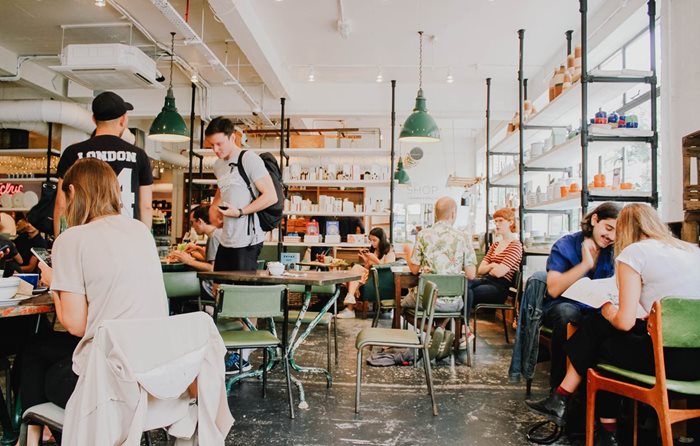
World Coffee Portal - Project Café 2020: New global coffee shop ...
sourced: world coffee portal

Jurgen Habermas created the phrase public sphere in 1962; he imagined this sphere to be like an 18th-century coffee shop filled with the intellectual “upper class” people. A space where people would critically discuss and debate new ideas and issues around the world free of social and political pressures.  In comparison, Habermas would cast “ordinary” people the role of the audience where they would observe the debates and have no verbal input. (Bruns & Highfield 2016)

With the internet and social media forever changing and evolving, the term ‘public sphere’ is growing with it. Some people argue that with the rise of social media, It’s not seen as a public sphere as it gets lost through the internet and anyone can participate.

However, I disagree. I think it’s a more inclusive and modern version of a “public sphere”.

For myself, my public sphere is a mix. up until recently, my sphere consisted of Instagram with a hint of Facebook. It was a way to connect and engage with topics and relevant information the people you follow choose to post. With social media evolving and linking with different platforms, its easy for each sphere to overlap and we as the users can determine who enters our sphere and vice versa. 

My sphere within Instagram consists of my friends, family, friends of friends, people who inspire me and have a positive impact on mental health, and a few celebrities/ influencers. I can choose who I engage with, so in a sense, I control my sphere. 

When I started my degree, my choices for a ‘public sphere’ grew, and Twitter has taken up a large portion of my contribution to discussion and debate. It’s a place where I engage with my peers and teachers #bcm110 #bcm113 @UOWDMS and discuss relevant issues within each subject and discuss current topics. I have found Twitter to be the most inclusive of public spheres as it gives everyone to be able to access information about ‘trending’ issues. If you have an account, it provides the user with the opportunity to contribute to the conversations. However, people who may be seen as excluded would be lower socioeconomic countries who may not access to technology and the older generation. 

Within any sphere, issues can arise. Within the world of  Twitter, it’s easy for people to debate with one another. A problem I find within this vertical community is that people can hide behind a screen and create issues within the virtual community. 

The global pandemic of COVID-19 a severe health issue relevant to everyone has been trending on twitter for the past couple of months. Hashtags, for instance, #covid_19 and one in particular #COVIDIOTS are both significant to this issue and has been a current hot spot for discussion.

The media plays a massive role in what is spoken about within the public sphere of Twitter as it is a significant source for all News stories. News channels/ newspapers and politicians such as Donald Trump (although his views are sceptical) share stories and their opinions via this platform. These accounts disperse information, and the issues go viral. Users create hashtags that start ‘trending’ to create conversation and share their views. 

 So let me know? Where is your public sphere?

Lucy xx

REFERENCE LIST

Bruns, a. and Highfield, T., 2016. Is Habermas on Twitter? Social Media and the Public Sphere. [online] p.99.

Who owns my News?

image sourced: shutter stock

For me, the news is everywhere I look. You wake up and check your phone; someone’s status, post, tweet is news related. You’re drinking your morning coffee, watching the morning news on TV.

There isn’t one platform or media outlet that I only choose to consume my news. I am constantly receiving information. Of an evening, I sometimes sit down and watch channel 10’s “the project” to be informed while also entertained. But that doesn’t mean that I’m not receiving similar information from other sources. Come on guys it’s 2020 for most of us our news consumption is through our phones, through apps like Facebook, Twitter, even Instagram.

So, who owns the news on these platforms we consume daily? Is it the founders of these platforms like twitters Jack Dorsey or Facebooks Mark Zuckerberg? Or is it a mixture of us, and other companies posting found sources from news articles. Starting conversations and debates to inform the people you are connected to through trusted social media outlets? Can you trust the information that’s being fed?

Social media moves fast, and so does news headlines and issues. News topics and information are often relevant issues and stories to what is going on the in the community, country and the world. If its “trending” you will find articles, links and influential people talking about relevant issues that they think you “need” to be informed about.

image from: https://www.profileformedia.com.au

With today’s social media platforms, it is easy for fake news to spread just as fast as authentic news. And we as the audience need to be aware of this and be able to tell the difference especially with Popular social networking sites such as Facebook, Twitter, YouTube and Google plus being the primary source of diffusion misinformation on online news media (Hlaing and Kham, 2020).

A global issue relevant currently that is everywhere we look is COVID-19. With this global pandemic, the information we receive must be authentic. With online news media being the leading source for misinformation, should we turn back to traditional ways of consuming our news only through newspapers and Television networks? Are they more trustworthy? With large corporations and public figures like Rupert Murdoch. A man who is seen to abuse media power. Owning the more significant portion of the worlds media; does it make you feel like all your news is continuously controlled and filtered?

Who owns the news we consume and how its mediated matters! It has the power to feed us information and influence our views and ideologies. Social media, for example, filters what is and isn’t okay for someone to post based on if viewers find it offensive or inappropriate, which can limit what we as an audience exposed to. Misleading news and information can lead to a lack of trust; that is a daunting thought.

It is interesting because I’ve never really thought about who “owns” the media I consume until this week’s topic. I am now finding myself more aware of it, and I guess that’s a good thing. It’s important to know who you are being controlled by and how it influences your life. Because at the end of the day it should be YOU who controls the media you consume.

Thanks for reading

Lucy xx

REFERENCE LIST

Hlaing, M and Kham, N., 2020 “Defining News Authenticity on Social Media Using Machine Learning Approach,” 2020 IEEE Conference on Computer Applications(ICCA), Yangon, Myanmar, pp. 1.

Johnston, C., 2016. From Films To Fox News: Rupert Murdoch’s Far-Reaching Media Empire. [online] the Guardian. Available at: <https://www.theguardian.com/media/2016/dec/10/from-films-to-fox-news-rupert-murdochs-far-reaching-media-empire&gt; [Accessed 15 April 2020].

Just do it….. Dream further.

What do you see when you see this image? What does this image mean to you? Does it make you feel empowered? Do you see something different from what I see?

This Nike campaign “Dream further” conveys an empowering and inspiring message showing young girls and women from any background and culture in a society that they are just as capable as anyone else to achieve any goal that they set out to make. It features a wide range of international influential female soccer players, from young aspiring players to top sponsored Nike athletes such as team captain of the Matildas Samantha Kerr.

This image is significant as It conveys a strong and vital message to everybody around the globe. This campaign was seen as “forward-thinking” and became the most viewed Nike football campaign ever, overtaking the male football league campaigns.

For many years’ women haven’t had the opportunity to be recognised as equals and to be able to achieve the same goals that men can meet. In the past, advertisements for many companies have displayed men and women to have particular careers and goals in society. Men were seen as the “mucho” breadwinners, athletic types whereas women were portrayed as the cleaners, cooks, women raising their children. For many young girls growing up being influenced by a society that implies that they should be a certain way and are only capable for specific roles and careers this could have altered what they initially wanted to achieve in their lifetime.

Yeah I know, This may seem very one-sided, however, a lot has changed over the years. Women are starting to be recognised in many positive ways; beginning to be seen as equals.
“It is Nike’s goal, then, to maintain that reality. To empower. To encourage.” (Benjamin, 2019). Nike is one brand that is changing the way we, as the audience, view sports.

To a degree, the image for this campaign isn’t the only message relevant the words itself “dream further”, signify meaning behind this image as well. As an audience, you may take away all of these meanings, or you may interpret in your ways.

The ideologies that we all have can have an impact on how well this campaign can be interpreted. It is interesting to think about how every individual’s mind works and how they see and understand different things. From colours, landmarks, to people and ideas. With Nike being one of the most influential athletic brands globally this campaign had the means to be able to encourage and support women in the athletic world that what they are passionate about matters and that people believe in what they can do.

I’m sure everyone is aware of Nike famous slogan “just do it”, and I believe that this advertisement is an accurate representation of what their brand stands for. That women can “do it” and can “dream further”.

Thanks for reading

Lucy xx

Reference

Benjamin, C., 2019. Nike’s ‘Dream Further’ Campaign For 2019 World Cup Highlights ‘Incredible Momentum’ Of Women’s Sports. [online] CBSSports.com. Available at: <https://www.cbssports.com/soccer/world-cup/news/nikes-dream-further-campaign-for-2019-world-cup-highlights-incredible-momentum-of-womens-sports/&gt; [Accessed 3 April 2020].

Live music….. nothing beats it, Right?

The Waifs (Live)

I’m sure many of you would agree that there is something truly special about seeing live music, something even more special when it’s a smaller venue and it feels more intimate. For me, it feels like the musician is entering your world and everyone attending has a connection.

Every few years my mum and I go and see one of our favourite bands “the Waifs” they are an Australian folk and blues band based in Western Australia. They have been around for nearly 30 years, and nothing beats seeing them live. No matter how many times I’ve seen them (I think I’m up to four times now), I still wish to hear all my favourite songs. In my opinion, they sound better to live because you can hear the musician enthusiasm bouncing off the audience engagement and excitement.

There is one concert in particular that stands out to me. It was a few years ago now, but they played at the Civic Theatre in my home town Newcastle. And the energy of the musicians, the mood and vibe of the audience was something incredible. There’s something wholesome about the atmosphere while seeing live music.
The audience is engaging and singing. Everyone is happy and enjoying themselves with friends and family or riding solo. The little conversations and stories the musicians share with the audience and the laughter and cheering they receive in response is something I feel most people look forward to when going to see live music.

Normally during concerts and live music audience engagement is encouraged. The cheering, the person in the back yelling out (“sing crazy train, sing crazy train”) laughter, singing along to all your favourite songs. The journal article How Live Music Moves Us: Head Movement Differences in Audiences to Live Versus Recorded Music states that “An iconic aspect of popular concerts is engaging with other audience members through moving to the music. Head movements, in particular, reflect the emotion and have social consequences when experienced with others.” (Swarbrick, 2019)

In week two’s tutorial, we broke off into groups to discuss what unspoken rules and guidelines we follow when participating as an audience. We all brought different ideas to the table and concluded that audience etiquette changes depending on the type of media you are consuming and where you are consuming the media. As a group, we got onto the topic of live music and how audience expectations depend on the type of live music you are attending. I feel as though the types of unspoken rules people are expected to follow change depending of the genre of music. For example, attending a classical orchestra expectations would be extremely different compared to a rock concert.

After thinking about my experiences when listening to live music over the years, I’ve realised that technology may be developing fast and there are now so many different ways to access/stream music I still believe that although types of audiences may changing and evolving the engagement and the feeling one gets when attending live music will never change.

What are your thoughts?
Thanks for listening

Lucy xx

REFERENCE LIST

Swarbrick, D., Bosnyak, D., Livingstone, S., Bansal, J., Marsh-Rollo, S., Woolhouse, M. and Trainor, L., 2019. How Live Music Moves Us: Head Movement Differences in Audiences to Live Versus Recorded Music. Frontiers in Psychology, 9.

WANDER WITH LUCE…. A Contextual Essay

My Digital artefact is an Instagram account accompanied by a series of YouTube videos. 

Initially I developed this idea because I wanted to utilise my passion for the outdoors and adventures to produce content to inspire individuals to get outdoors and explore their local area and places around the world. 

I drew inspiration from a number of different instagram and Youtube accounts that had a similar aesthetic/ vibe that I was wanting to create for my DA. Accounts such as Sam Clark, Visit NSW, Celeste Cameron, Jade Collins are some that I draw inspiration from.

In the first stages I wanted to just produce a YouTube channel to produce vlogs and video montages of travel footage I had already taken from previous travels as well as adventures I would be going on throughout the semester. I thought that this platform of YouTube would allow me to engage with a wide audience and YouTube has always been something I’ve always wanted to try but have been too shy to put myself out there.

Based on poll feedback that I posted on twitter, Facebook and my personal Instagram. I iterated my DA to create content more specific to my targeted audience and on platforms that my users use more frequently. To ensure my content would reach the right audience and From this initial stage I have decided to develop an Instagram page and YouTube channel

 “WANDER WITH LUCE”. Its a hiking/exploring page for adventurous souls out there. It is a place for individuals to learn about local hiking spots and day’s trip adventures around the Illawarra and south coast area.

First i started my Instagram account and posted photos of places I was visiting with short and sweet captions detailing how the places made me feel. Based on feedback from mu users from polls and Instagram stories. I iterated my content by making my captions more informative to give my users more value. From this I have been engaging more with my users and having more interactions.

My content has changed a little bit too. Rather than creating videos of travels, I’ve been on overseas, and at camp, I’m going to focus on hiking, hidden gems and beautiful lookouts around the Illawarra and south coast.

Places I have visited have included, Minnamurra Rainforest, Sublime point, Mount Kiera, Jervis Bay and many more. I chose to iterate my initial concept so that it was more specific and beneficial for my users due to the geographical location of most of my users. From altering my DA and making it more specific I have seen growth in followers and more engagement from my users through likes and comments. 

Another step I have taken to make sure I was creating and posting the right content for my users was posting polls on twitter and Instagram stories. I did this to gain feedback to make sure I was creating the right kind of content my users wanted so that they could increase value from my posts. Due to the outcomes from these polls, I have Learnt more about my users and gained more of an insight into where ‘Wander with luce’ is heading.

Last but not least, one aspect of ‘wander with luce’ that still isn’t thriving in my Videos. I have been producing videos since the beginning (BEBO) initially wanting them to be my main content, but due to feedback have used my videos as a secondary source. Although I’ve still been creating and posting videos on YouTube and IGTV I’ve noticed the lake of Views/ engagement from my users compared to when posting Photos. This is something I’m still trying to navigate. I may continue producing videos because I enjoy them, but I’m still searching for ideas on how to engage my users through video.

SOURCES

MAKING….

Over the course of the semester WANDER WITH LUCE has produced

  • Three videos posted on IGTV and YouTube
  • Posted twenty four posts on Instagram
  • Gained nighty seven followers
  • Interacted with my users through Instagram stories and polls

Each post I’ve been iterating based on feedback from my users, so I continue to produce content that will give them more value.
I still post “duds” from time to time, but I see this as a learning experience to see what is working for my users and what isn’t.

I’ve had a lot of #FEFO moments, but that’s part of the journey. And at times I’ve felt as though my Digital Artefact hasn’t always had the T in #FIST. My DA to a degree has been weather dependent, and with my initial expectations of creating five videos over the semester, those expectations weren’t really ‘Tiny’. I’ve learnt to iterate my Digital Artefact and work with what I had and the time I had. At times a put a lot of pressure on myself to produce what I initially set out to do, however with the feedback from teachers and users it helped me understand that iteration is good and prototyping is a necessary tool in developing a Digital artefact. I’m thrilled with the progress “Wander with Luce” has had and will continue to have.

WANDER WITH LUCE Youtube channel

Over this course of this semester, I’ve learnt a lot I came into bcm114 not knowing what I was doing, and in such a short period I’ve learnt so much about what I love doing. It’s crazy before starting my DA I’ve always wanted to produce content and videos but never really knew how to go about it/didn’t have the courage to put myself out there online to be judged/criticized. But at the end of the day if you’re doing something you love and are passionate about it doesn’t matter if EVERYBODY likes it matters if it makes you happy and you enjoy what you’re doing.
If WANDER WITH LUCE brings joy or teaches something to even one person, then that is enough for me.

I started ‘Wander with Luce’ because I wanted to share the places I visit around the Illawarra and South Coast and show people places to visit/ hidden spots people may not know about while in the area. I wanted to encourage people to get outdoors more and explore what this world has to offer, if they aren’t from the area, get outdoors and explore their local area.
I feel as though I have started to achieve this, and I will continue to do so.

WANDER WITH LUCE series of the Illawarra may be coming to a close. Still, I’ve already started thinking about the future and based on feedback from my users; my next instalment will be a series of hiking ad exploring my hometown of Newcastle.

Stay tuned for this next chapter, and I hope you have enjoyed this adventure with me it’s been an epic ride.

Until next time

Lucy xx

Design a site like this with WordPress.com
Get started